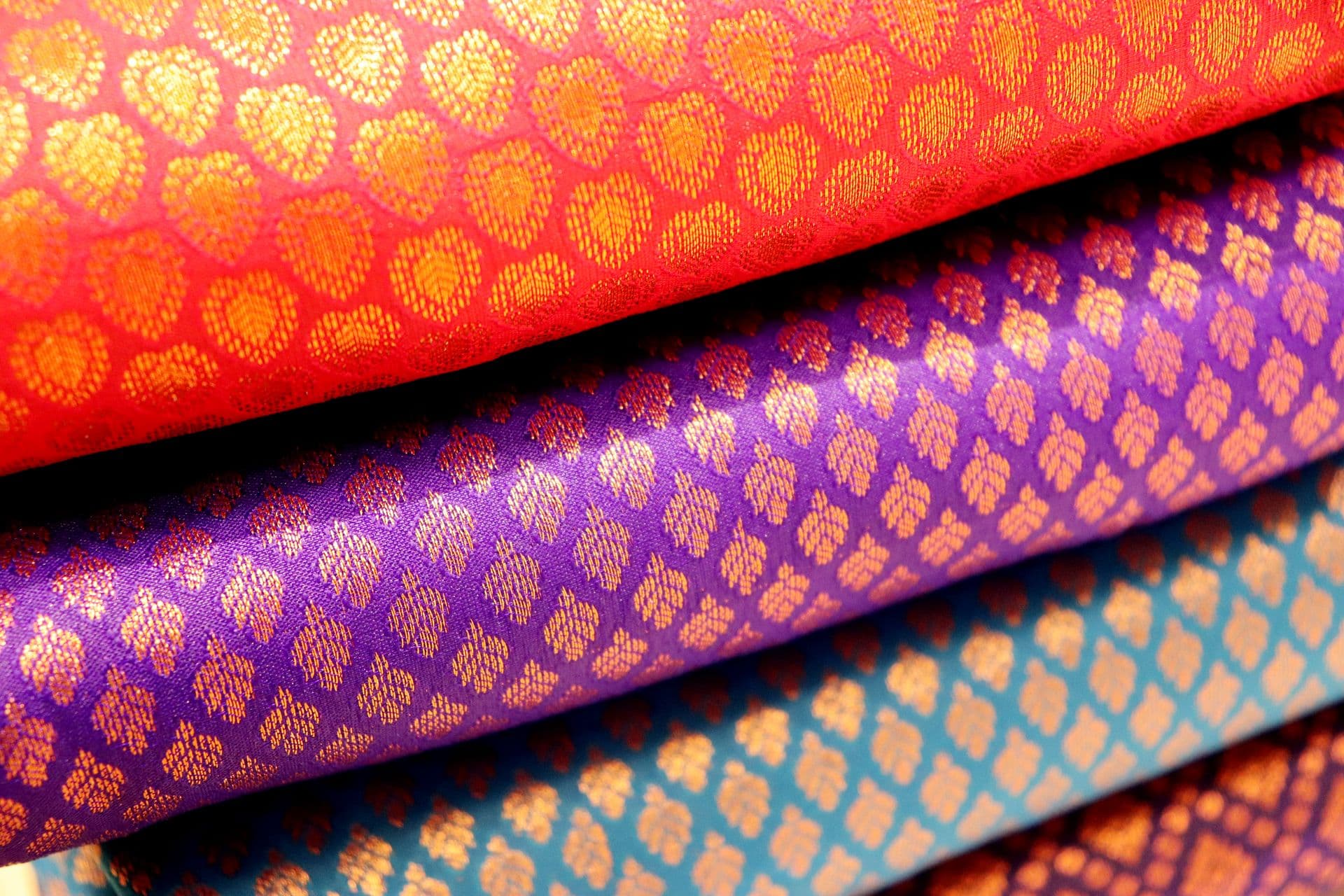
Kanchipuram, Tamil Nadu
Kanjivaram
Three-ply mulberry silk with borders woven separately and joined by the korvai stitch — a join so strong the sari outlives its wearer. The heaviest weave we buy, and the first fabric Razeliya ever cut.
Our craft
Razeliya doesn’t buy fabric from a catalogue. We buy it from the towns that invented it — silk from Kanchipuram, brocade from the lanes behind the Varanasi ghats, tie-dye from the edge of the Rann. This is the map we actually travel, pinned town by town.
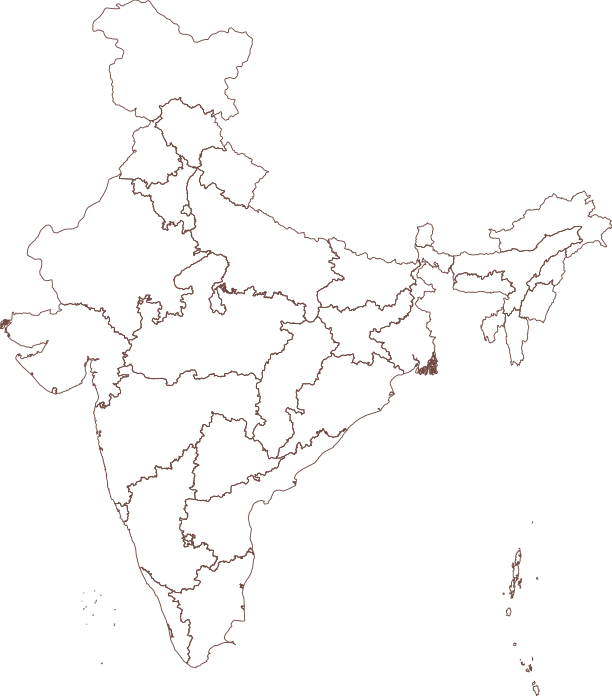
Click a pin to open its field noteTap a pin to open its field note
Kanchipuram, Tamil Nadu
Three-ply mulberry silk with borders woven separately and joined by the korvai stitch — a join so strong the sari outlives its wearer. The heaviest weave we buy, and the first fabric Razeliya ever cut.
Hover a pin for a glance, click to keep its noteTap a pin, or wander the register
Real pashmina begins as fleece combed by hand from Changthangi goats each spring, then spun so fine a finished shawl passes through a ring. Ours comes from two family workshops near the Jhelum, and we wait for winter delivery rather than rush the spinners.
Phulkari is embroidery, not weave — darning stitches packed so dense with floss silk that the base cloth almost disappears under flowers. The Patiala women we buy from still count threads by eye instead of tracing a pattern.
In Sanganer the printers stamp by eye — teak blocks, vegetable dyes, no registration marks, just a wrist that has done this for thirty years. The repeat drifts a millimetre here and there. That drift is how you know it wasn’t a machine.
Thousands of pinhead knots tied into the cloth before it ever meets the dye bath, then opened one by one after. The tighter the tie, the sharper the dot — and the Khatri families of Kutch tie the tightest knots in India.
Silk warp, cotton weft, and a glassy sheerness this one town has guarded since royal courts ordered their turban cloth here. Our summer kurtis lean on it hard: it holds a crisp fall in forty-degree heat.
Brocade worked in real zari on pit looms in the old weaving lanes behind the ghats. A heavy bridal metre can take a family a full day, which is why we place festival orders in the quiet months and pay when we order, not when we collect.
A wilder silk reeled from forest cocoons, with a natural gold cast and a dry, raw grain no mill can imitate. Bhagalpur has spun it for two centuries; it drapes heavy and matte, the opposite of shine, and some occasions call for exactly that.
Assam’s amber silk, woven nowhere else on earth and impossible to bleach — the shine only deepens with every wash. Sualkuchi’s looms run to their own calendar, so we book a season ahead and consider the wait part of the price.
Motifs floated into the cloth by hand as it is woven, thread by supplementary thread, like inlay work done in cotton. A fine jamdani metre grows a few centimetres a day. You cannot hurry it, and we have stopped trying.
The yarn is tie-dyed before the loom is ever dressed, so the pattern lives inside the thread rather than printed on top. The edges of every motif blur softly where the dye crept under the ties. They are meant to.
Peacocks and lotus borders built in interlocked tapestry weave — turn a true Paithani over and the reverse is as clean as the face. That is how our buyer checks one, and how you can too.
Geometry dyed into both warp and weft, then matched at the loom to the millimetre. This one village taught half of India its double ikat, and its weavers can still tell you which house a fabric came from by the diamond in its border.
A dense, quiet crepe degummed until it pours, with a sheen closer to moonlight than gloss. When a lehenga needs weight without stiffness, this is the bolt our cutters reach for first.
Three-ply mulberry silk with borders woven separately and joined by the korvai stitch — a join so strong the sari outlives its wearer. The heaviest weave we buy, and the first fabric Razeliya ever cut.
Kanjivaram, Kanchipuram, Tamil Nadu. Three-ply mulberry silk with borders woven separately and joined by the korvai stitch — a join so strong the sari outlives its wearer. The heaviest weave we buy, and the first fabric Razeliya ever cut.
Kanchipuram, Tamil Nadu
Three-ply mulberry silk with borders woven separately and joined by the korvai stitch — a join so strong the sari outlives its wearer. The heaviest weave we buy, and the first fabric Razeliya ever cut.
Quality
Check 01
Drape it over a wrist, crush it in a fist, let go. Real silk recovers on its own; blends confess in the creases.
Check 02
Threads per inch against our master swatch, weight per metre on a scale. Numbers first, romance second.
Check 03
A cut corner spends the night in warm water. If the dye walks, the bolt goes back — whatever the story behind it.
Check 04
We read the reverse like a signature. Clean floats and tidy joins mean a weaver who was never rushed.
Why it matters
Twice a year, our buying trip leaves with empty suitcases and a list of front doors. No agents, no consolidators — the person who wove your fabric can name the person who bought it. Most of those doors have been on the list since before Razeliya had a name.
We pay at the loom, in full, before festival season empties every workshop’s order book. Some years that costs us more than it should. It has never once cost us a weaver.
Every order slip names its cloth and its town — so you know what you’re wearing, and who to thank for it.
From loom to you